
Montessori Principles Every Teacher Can Use
What Makes Montessori Education So Effective?
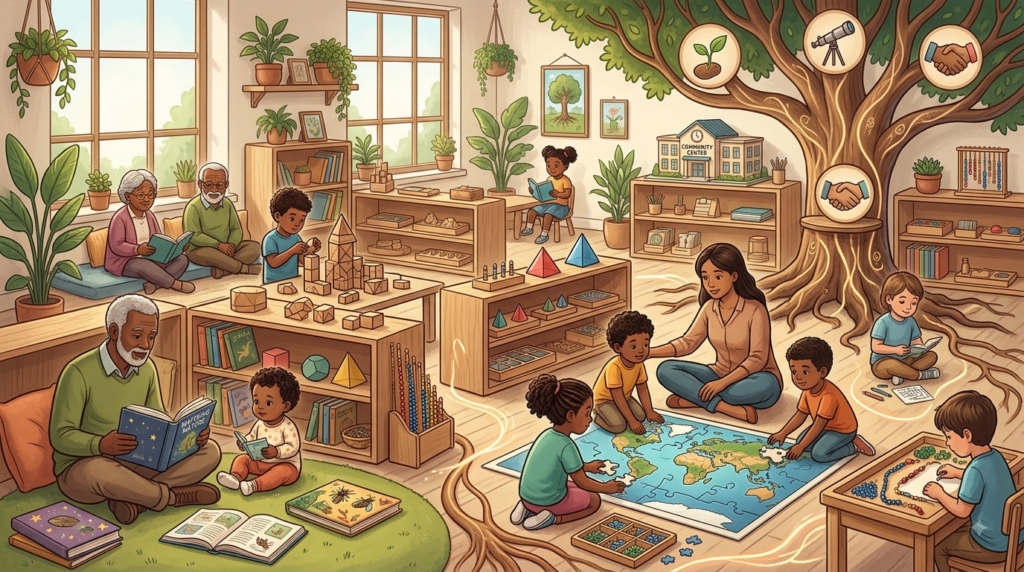
Walk into a Montessori classroom and you may notice something different.
Children are not sitting quietly in rows waiting for instructions.
Instead, they are:
Exploring
Creating
Observing
Solving problems
Learning independently
The teacher is not the center of attention.
The child is.
This simple shift changes everything.
The good news is that teachers do not need a Montessori classroom to apply Montessori principles.
Many of these ideas can improve learning in any educational environment.
In This Article
✓ What Montessori education really means
✓ Key principles every teacher can use
✓ Why observation matters
✓ How to encourage independence
✓ Practical classroom applications
What Is Montessori Education?
Developed by Dr. Maria Montessori, this approach is based on a simple belief:
Children are naturally curious and capable learners.
Instead of forcing learning, Montessori education creates an environment where learning can happen naturally.
The teacher’s role is not simply to teach.
The teacher’s role is to guide.
Children may forget what we tell them, but they rarely forget what we show them.
— Namaora Thought
Principle 1: Observe Before You Intervene
One of the most powerful Montessori practices is observation.
Many adults rush to help.
Montessori teachers first observe.
They ask:
What is the child trying to do?
What challenge are they facing?
What can they discover independently?
Observation helps teachers understand children more deeply.
Classroom Application
Before correcting a student immediately, take a moment to observe.
Sometimes children are already finding their own solution.
Principle 2: Encourage Independence
Montessori classrooms are designed to help children do things for themselves.
Independence builds:
Confidence
Responsibility
Problem-solving skills
Self-belief
Children feel capable when they can contribute meaningfully.
Classroom Application
Allow students to:
✓ Organize materials
✓ Make choices
✓ Solve simple problems
✓ Take ownership of tasks
Principle 3: Follow the Child’s Curiosity
Children learn best when they are interested.
Curiosity creates attention.
Attention creates learning.
Montessori educators recognize that motivation often comes from within.
Classroom Application
Whenever possible:
Connect lessons to student interests
Encourage questions
Allow exploration
Provide choices
Curious learners become lifelong learners.
Principle 4: Learning Through Experience
Children learn by doing.
Not just by listening.
Hands-on experiences help children:
Understand concepts deeply
Remember information longer
Develop critical thinking
Classroom Application
Instead of only explaining:
Let students:
Build
Experiment
Create
Demonstrate
Learning becomes more meaningful.
Principle 5: Respect the Child
Montessori education emphasizes respect.
Children are treated as capable individuals.
Respect creates trust.
Trust creates confidence.
Confidence supports learning.
Classroom Application
Simple examples:
✓ Listen carefully
✓ Avoid unnecessary interruptions
✓ Encourage student voice
✓ Respect individual learning pace
Principle 6: Create a Prepared Environment
The learning environment influences behavior.
A well-organized space encourages:
Focus
Independence
Responsibility
Calmness
Children learn from the environment around them.
Classroom Application
Ask:
Is the classroom organized?
Are materials accessible?
Does the space encourage learning?
Sometimes improving the environment improves behavior.
Principle 7: Focus on Progress, Not Perfection
Montessori education values growth.
Learning is viewed as a journey.
Mistakes are part of the process.
Children become more confident when they feel safe to try.
Classroom Application
Celebrate:
✓ Effort
✓ Improvement
✓ Persistence
✓ Curiosity
Not just correct answers.
What Modern Education Can Learn
Today’s world is changing rapidly.
Children need more than memorization.
They need:
Creativity
Adaptability
Communication
Critical thinking
Problem-solving
Many Montessori principles naturally support these future-ready skills.
Common Misunderstandings About Montessori
Montessori does NOT mean:
❌ No structure
❌ No discipline
❌ No learning goals
❌ Children doing whatever they want
Instead, Montessori creates purposeful freedom within clear boundaries.
5 Simple Montessori Ideas Teachers Can Start Tomorrow
1. Observe More
Spend five extra minutes observing students.
2. Ask More Questions
Encourage thinking instead of providing immediate answers.
3. Allow Choice
Offer two or three learning options.
4. Encourage Responsibility
Give students meaningful classroom roles.
5. Celebrate Growth
Recognize effort and improvement.
Key Takeaways
- ✓ Children learn best when actively engaged.
- ✓ Observation helps teachers understand learners.
- ✓ Independence builds confidence.
- ✓ Curiosity fuels learning.
- ✓ Environment influences behavior.
- ✓ Progress matters more than perfection.
- ✓ Montessori principles can benefit any classroom.
Pause & Reflect
Think about your teaching practice.
Which Montessori principle could you begin using this week?
Sometimes small changes create the biggest impact.
The Namaora Thought
Great teachers do not simply fill minds with information. They create environments where curiosity, confidence, and learning can grow naturally.
Continue Your Learning Journey
Every child has the potential to learn, explore, and thrive when given the right environment and guidance.
Explore more Namaora articles on teaching, child development, early learning, and future-ready education.
Next Recommended Article
👉 Why Modern Classrooms Must Teach Curiosity, Not Just Content
This is a natural follow-up article and positions Namaora as a forward-thinking voice in education, helping teachers bridge traditional methods with the needs of today’s children.