5 Skills Children Need More Than Marks in the Future
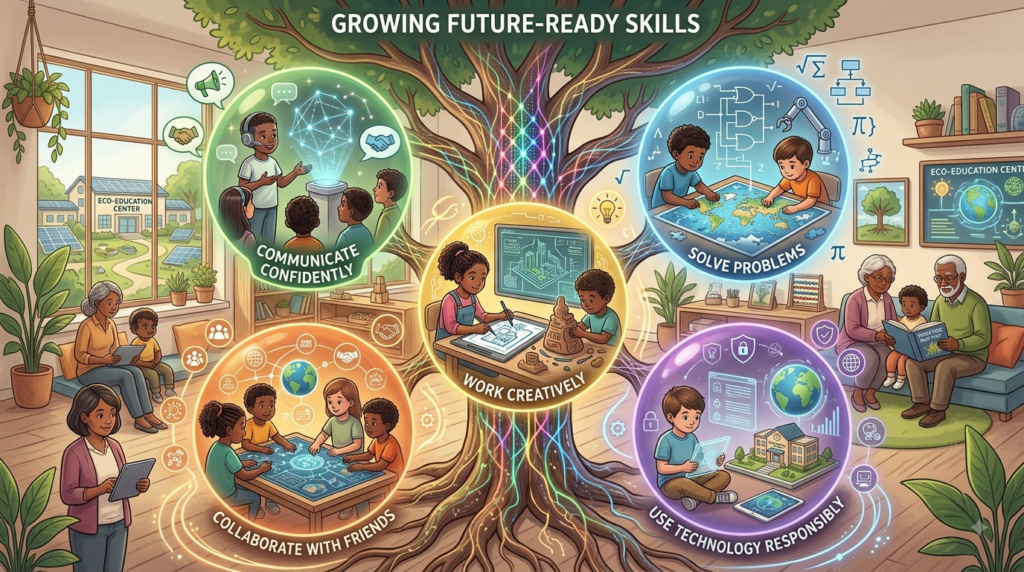
Will Marks Alone Prepare Children for the Future?
For generations, academic performance has been considered the primary measure of success.
Parents ask:
How many marks?
What rank?
Which school?
Which exam?
These questions are understandable.
But the future workplace is changing.
Many careers that today’s children will enter do not even exist yet.
Artificial Intelligence can answer questions.
Technology can perform calculations.
Information is available instantly.
What will make children valuable is not simply what they know.
It is how they think, communicate, adapt, and create.
That is why future-ready skills matter more than ever.
In This Article
✓ Why marks alone are not enough
✓ The five future-ready skills children need
✓ How parents and teachers can develop them
✓ Practical ideas for everyday life
Marks Matter, But They Are Not Everything
Marks can measure:
✓ Memory
✓ Understanding
✓ Test performance
But they often cannot fully measure:
Creativity
Leadership
Communication
Resilience
Problem-solving
A child may score highly and still struggle to adapt to new situations.
Another child may not always top exams but may become an exceptional leader, entrepreneur, innovator, or creator.
The goal should not be marks or skills.
The goal should be marks and skills.
Children may forget what we tell them, but they rarely forget what we show them.
— Namaora Thought
Skill 1: Critical Thinking
The Ability to Think, Not Just Memorize
In a world filled with information, children must learn how to think independently.
Critical thinkers ask:
Why?
How?
What if?
Is this true?
Instead of accepting everything at face value, they evaluate and analyze.
How Parents and Teachers Can Help
Ask questions instead of giving immediate answers.
Example:
Instead of:
“Here is the answer.”
Try:
“What do you think?”
Skill 2: Communication
Ideas Only Matter When They Can Be Shared
Many talented people struggle because they cannot communicate effectively.
Children need opportunities to:
Speak
Listen
Present ideas
Express emotions
Share opinions respectfully
Communication is a lifelong advantage.
Practical Activities
✓ Storytelling
✓ Family discussions
✓ Reading aloud
✓ Classroom presentations
✓ Public speaking opportunities
Skill 3: Creativity
The Ability to Create New Possibilities
AI can generate information.
Creativity helps humans generate possibilities.
Creative children:
Imagine solutions
Explore ideas
Innovate
Adapt
Creativity is becoming increasingly valuable in a rapidly changing world.
Encourage Creativity Through
✓ Open-ended play
✓ Art
✓ Building projects
✓ Writing stories
✓ Exploring nature
✓ Asking imaginative questions
Skill 4: Problem-Solving
Every Future Career Requires It
Life constantly presents challenges.
Children who can identify problems and find solutions gain confidence and independence.
Problem-solvers do not wait for answers.
They look for them.
Practical Ways to Develop Problem-Solving
Instead of solving every issue for children:
Ask:
“What are some possible solutions?”
This simple question builds powerful thinking skills.
Skill 5: Adaptability
The Future Belongs to Lifelong Learners
Technology changes.
Industries change.
Jobs change.
The ability to adapt may become one of the most valuable skills of all.
Adaptable children learn:
Flexibility
Resilience
Curiosity
Continuous learning
They are comfortable with change.
How to Encourage Adaptability
Allow children to:
✓ Try new activities
✓ Learn new skills
✓ Experience challenges
✓ Make mistakes
✓ Explore unfamiliar situations
What About Artificial Intelligence?
Many parents ask:
“Will AI replace jobs?”
The better question is:
“What skills will help children work alongside AI?”
Future-ready children will use technology as a tool.
They will still need:
Creativity
Judgment
Communication
Ethics
Leadership
Emotional intelligence
These human strengths will remain valuable.
A Simple Future Skills Formula
Every week, try to give children opportunities for:
✓ Reading
✓ Conversation
✓ Creativity
✓ Problem-solving
✓ Exploration
✓ Reflection
These experiences build skills that last far beyond school years.
Key Takeaways
- ✓ Marks are important but not enough.
- ✓ Critical thinking helps children evaluate information.
- ✓ Communication helps children share ideas effectively.
- ✓ Creativity drives innovation.
- ✓ Problem-solving builds independence.
- ✓ Adaptability prepares children for change.
- ✓ Future success requires both knowledge and skills.
Pause & Reflect
Think about your child.
Which of these five skills is already developing well?
Which skill could you intentionally encourage this month?
Small opportunities today can create big advantages tomorrow.
The Namaora Thought
The future will not belong to the children who know the most facts. It will belong to the children who can learn, think, adapt, create, and grow throughout their lives.
Continue Your Learning Journey
Preparing children for the future is not about predicting tomorrow.
It is about helping them develop the skills to thrive no matter what tomorrow brings.
Explore more Namaora articles on future-ready skills, child development, parenting, digital wellness, and lifelong learning.
Next Recommended Article
👉 Why Modern Classrooms Must Teach Curiosity, Not Just Content
This is the perfect next step because curiosity is the foundation that powers all five future-ready skills and aligns beautifully with Namaora’s vision of nurturing lifelong learners.